
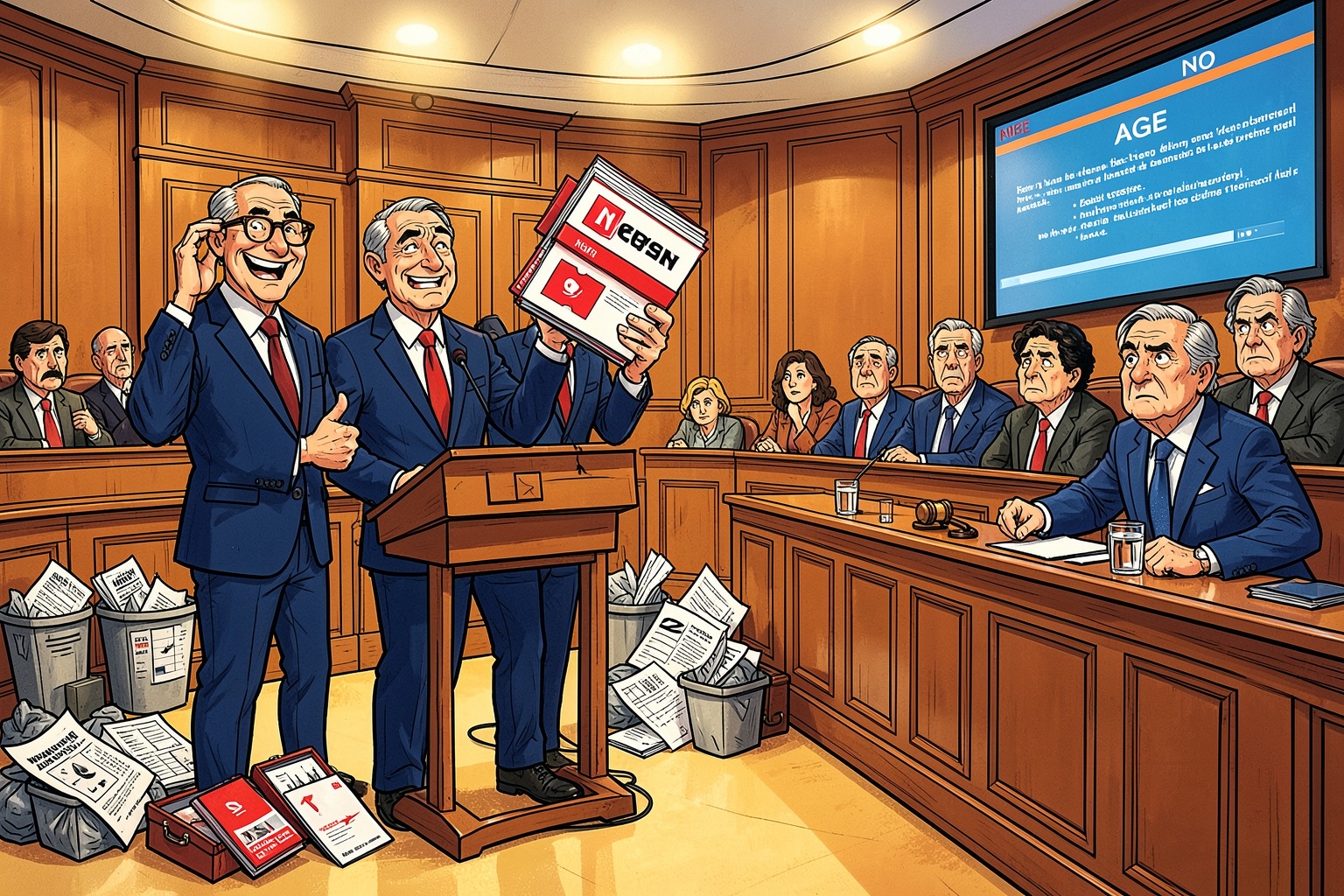
A global investigation found that Red Bull spent more than a decade funding university research that consistently concluded mixing energy drinks with alcohol is not harmful. These findings contradict the majority of independent studies and have shaped public health policy across multiple countries [S1, S2]. [1] [2]
The investigation, a collaboration involving The Examination, STAT, and other outlets, reveals how industry-funded science influenced legislative decisions from local U.S. counties to European food regulators [S1, S2].
How Red Bull’s Scientists Helped Defeat Local Restrictions
The company’s strategy played out publicly in Suffolk County, New York, in 2011. Local lawmakers were considering a ban on selling energy drinks to minors, a proposal that followed the FDA’s effective ban on Four Loko, a caffeinated malt liquor nicknamed “blackout in a can” by college students [S1, S2].
Joris Verster, an academic from Utrecht University, traveled to the hearing and told officials there was no scientific basis for the law. He argued that blaming energy drinks for binge drinking would be like blaming shark attacks on summertime ice cream sales, using an analogy tailored to the Long Island community that inspired the thriller “Jaws” [S1, S2].
Verster was one of three scientists who crossed the Atlantic to urge officials to drop the proposal. The other two were a British professor and Red Bull’s chief scientific officer. All three had received money from Red Bull through paychecks or research grants [S1, S2].
Their argument succeeded. Lawmakers dropped the age limit provision [S1, S2].
The Funding Pattern Behind the Research
The Suffolk County hearing was an early victory in what became a global campaign. For more than a decade, Red Bull paid hundreds of thousands of dollars for university professors to conduct research favorable to the energy drink industry [S1, S2].
The company’s efforts extended beyond funding individual studies. Red Bull flew academics to U.S. cities and provided talking points for meetings with government officials considering restrictions on energy drinks. It also funded doctorates for researchers in the United Kingdom and the Netherlands [S1, S2].
In the United States and Canada, research backed by Red Bull or conducted by academics with financial ties to the company has been used to defeat measures such as age restrictions and warning labels [S1, S2].
The Stark Divide in Research Findings
The investigation gathered more than 100 studies about the health or behavioral risks of mixing energy drinks and alcohol. The findings reveal a sharp split along funding lines [S1, S2].
Of the studies that received Red Bull funding or were conducted by researchers who disclosed financial conflicts of interest with the company, 95% concluded that mixing alcohol with energy drinks did not increase health or behavioral risks [S1, S2].
Roughly 80% of independent studies reached the opposite conclusion [S1, S2].
The Red Bull-backed studies have been nearly unanimous in their message: consuming energy drinks and alcohol together is no more harmful than drinking alcohol alone [S1, S2].
Methodological Concerns and Researcher Withdrawals
Leading alcohol researchers who reviewed some of the Red Bull-tied studies identified deeper problems than just funding source. A number of the studies are flawed, they said, raising questions about their conclusions [S1, S2].
In one case, a team of scientists in Boston withdrew from a Red Bull-funded study after Verster refused to address problems they believed would bias the results [S1, S2].
Peter Miller, a professor at Deakin University in Australia, criticized the wave of industry-funded studies in a 2013 medical journal essay. He told The Examination that the research grants represent “an investment using universities’ reputation to be able to influence policy” and described the effort as “a campaign to protect their profits and to avoid legislative intervention” [1].
How Industry Research Shaped European Policy
The Red Bull-funded studies had consequences beyond local U.S. politics. A pivotal 2015 report by a European food agency cited these studies in finding that there was not clear evidence that mixing energy drinks and alcohol was harmful [S1, S2].
That report remains the last word on the subject in Europe and has been used to prevent regulatory action elsewhere [S1, S2].
Voluntary guidelines published by American and European industry groups say their member companies, which include Red Bull and Monster Beverage Corp., do not promote mixing energy drinks with alcohol and do not claim that energy drinks counteract the effects of alcohol. The European group said academic research has found that mixing the two does not pose additional risks [1].
Red Bull’s Global Head of Science, Regulatory and Government Affairs, Karlheinz Niederreiter, wrote in a brief statement that health authorities across the world have concluded Red Bull Energy Drink is safe to consume, noting that nearly 14 billion cans were sold worldwide last year. He and other Red Bull executives did not answer specific questions about the investigation’s findings, including those about the safety of consuming energy drinks with alcohol [1].
The Broader Pattern
The investigation highlights a broader pattern in which companies fund research into controversial products, a practice criticized by health advocates. What distinguishes this case, according to the independent researchers who reviewed the studies, is that the methodological problems in the Red Bull-tied work raise questions about whether the conclusions should carry weight in policy decisions at all [S1, S2].
If you want to understand how science policy gets shaped, follow the funding. The Red Bull case shows how strategically placed research can influence decisions from a county hearing room to a continental food regulator, and why checking who paid for a study matters when the findings affect public health.
Sources
- Is it safe to drink vodka Red Bull? Dubious research tied to the …
- Red Bull-tied science has shaped energy drink policy | STAT
- Dubious research tied to Red Bull has shaped energy drink policy
- Is it safe to drink Red Bull and vodka? Dubious research tied to the …
- Dubious research tied to Red Bull has shaped energy drink policy …
- Dubious Quality: Red Bull
- Satanic Symbolism in Energy Drink Logos - EerieWeb
- Why does Red Bull logo have bulls? - Promisekit.org