Epic’s AI strategy has moved past the pilot phase. More than 85% of Epic customers now use at least one Epic AI tool, and the company’s three core agents — Art for clinicians, Penny for revenue cycle, and Emmie for patients — are producing documented operational results across hundreds of health systems [1][2]. At the 2026 Users Group Meeting and HIMSS, Epic framed the next chapter: a platform for organizations to build their own agents and a family of foundation models trained on real-world patient data [2][5].
The three agents already delivering measurable ROI
Art, Penny, and Emmie each target a different friction point, and the numbers are specific. Clinicians at multiple organizations complete discharge summaries 20–30% faster using Art’s draft hospital course notes [1][6]. At Riverside Health, inpatient teams spend up to 32% less time on documentation and communication tasks with Art’s Inpatient Insights [1]. The clinical impact goes beyond speed: at The Christ Hospital, Art extracts incidental findings from radiology reports to drive follow-up, achieving a 69% early detection rate for lung cancer versus the national average of 46% [1][5].
Penny attacks prior authorization and coding denials. Summit Health cut medication prior authorization submission time by 42%, with 92% of AI-generated responses accepted without edits [1][6]. Health systems heavily using Penny see coding-related denials drop more than 20%, reducing rework and revenue leakage [1]. Organizations also create denial appeal letters 23% faster [1].
Emmie handles patient-facing volume. Rush University Medical Center reports a sustained 58% reduction in billing-related customer service messages [1][6]. Ochsner Health patients have rescheduled more than 14,900 appointments through Emmie, saving nearly 750 staff hours [1]. At Sutter Health, Ask Emmie — a conversational assistant inside MyChart grounded in the patient’s own record — is live for an initial user group with broader rollout planned [1][2]. Community Health Network saw 73% fewer billing-related InBasket messages after launching Ask Emmie [2].
Agent Factory turns the EHR into an agent development platform
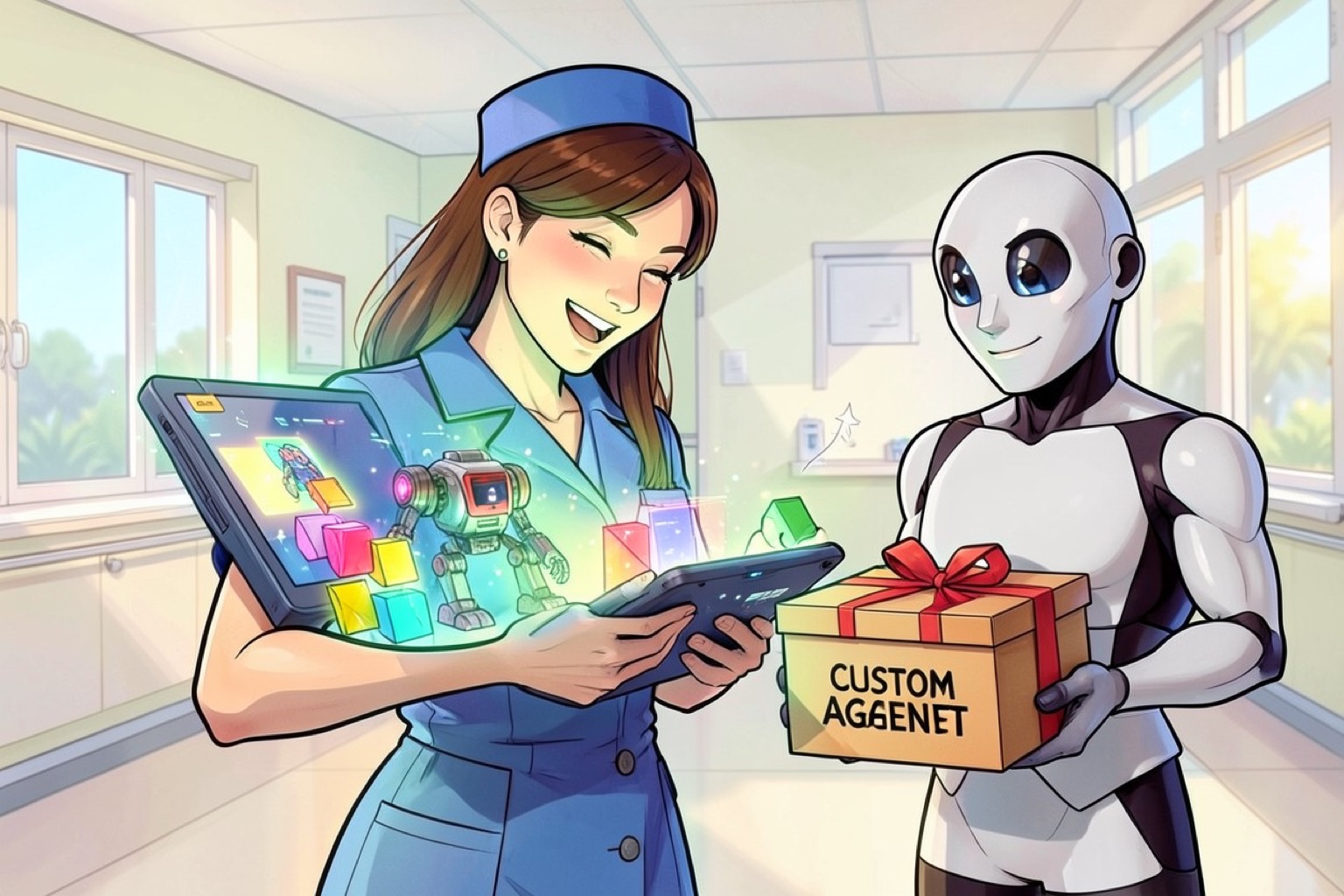
The headline capability is Agent Factory, a visual drag-and-drop environment that lets health systems create, customize, and deploy AI agents that reason and act across Epic workflows [2][3][5]. Agents can be equipped with local policies, knowledge bases, and guardrails, and deployed on the organization’s timeline [2][6]. Epic also plans to publish a library of pre-built, on-platform agents ready to use [6].
Phil Lindemann, Epic’s VP of data and research, describes Factory as a “playground” for innovative health systems that want to reimagine cross-workflow processes — scheduling, referrals, and patient experience wired together rather than managed as separate apps [3]. Chief Medical Officer Jackie Gerhart says it puts hospitals “in the driver’s seat” to design tools around the problems they actually face [3].
Curiosity and Cosmos bring predictive foundation models into the workflow
Alongside Agent Factory, Epic is building Curiosity, a proprietary family of medical foundation models trained on anonymized real-world patient records from Cosmos, Epic’s clinical research network [1][5][6]. These models predict the next medical event across diagnoses, medications, procedures, and outcomes [1][6]. The goal is to surface data-driven treatment options at the point of care and power features like a diagnosis checker that suggests differential diagnoses and next steps based on patterns in symptoms, history, and outcomes [1][6].
Ergo, Epic’s term for its combined “healthcare intelligence” layer, blends human judgment with AI pattern-finding across the EHR, MyChart, the Epic network, and Cosmos [2]. Conversational AI for clinicians will let Art answer direct questions (“How is this patient’s blood pressure trending?”) and inferred questions from conversational context [1][6]. Collaborative visit agendas will let Art and Emmie co-build a shared agenda from patient and clinician priorities before the visit [1][6].
Readiness matters: start narrow, leverage context, then expand
Canvas Medical CEO Adam Farren warns that most hospitals aren’t ready to exploit Agent Factory’s breadth yet [3]. His advice: demonstrate early wins with “narrow agents” that solve specific, high-impact problems before attempting broader workflows [3]. A narrow job accomplished cleanly beats a complex workflow with more surface area for error [3]. Farren also stresses that agentic AI’s differentiator is context ingestion — the patient record, hospital protocols, standing orders, and history of similar encounters — and that organizations must fully leverage that context to make agents useful and safe [3].
Epic’s own rollout pattern reflects this logic. Chart with Art launched in outpatient specialties in February, expanded to bedside nursing at Houston Methodist in March (now live at 11 health systems), and targets home care in April [1][2]. The tool now spans more than 70 specialties and multiple clinical roles [2].
What to watch next
Epic’s roadmap includes autonomous coding sessions and appeal submissions by Penny within organizational guardrails [1], broader Ask Emmie availability [1], and the Open@Epic conference in October for app developers and healthcare experts [1]. For health system leaders, the practical question isn’t whether to adopt AI — it’s whether to configure Epic’s built-in agents, extend them via Agent Factory, or both. The evidence suggests starting with a narrow, measurable use case, proving the workflow, and then scaling toward the cross-process orchestration that Factory enables.
Sources
- Real Results, Right Now: How Epic AI Is Reducing Costs, Improving Care …
- Epic spotlights Agent Factory, Cosmos-powered predictive tools
- The Agentic EHR: Epic Unveils ‘Agent Factory’ and Custom Models
- HIMSS26: Epic expands AI road map, touts key outcome metrics
- Epic Is Letting Health Systems Build Their Own Agents — But Are They …
- 5 things to know about Epic’s 2026 UGM AI announcements