Google’s AI researchers are in open conflict with management over two connected fronts: the right to publish safety research and the company’s pursuit of classified military contracts. The dispute has escalated to a unionization vote at DeepMind’s UK offices, where 98 percent of ballots cast favored joining the Communication Workers Union and Unite the Union [8]. If recognized, this would make DeepMind the first frontier AI lab with unionized workers.
Publication restrictions choke safety research
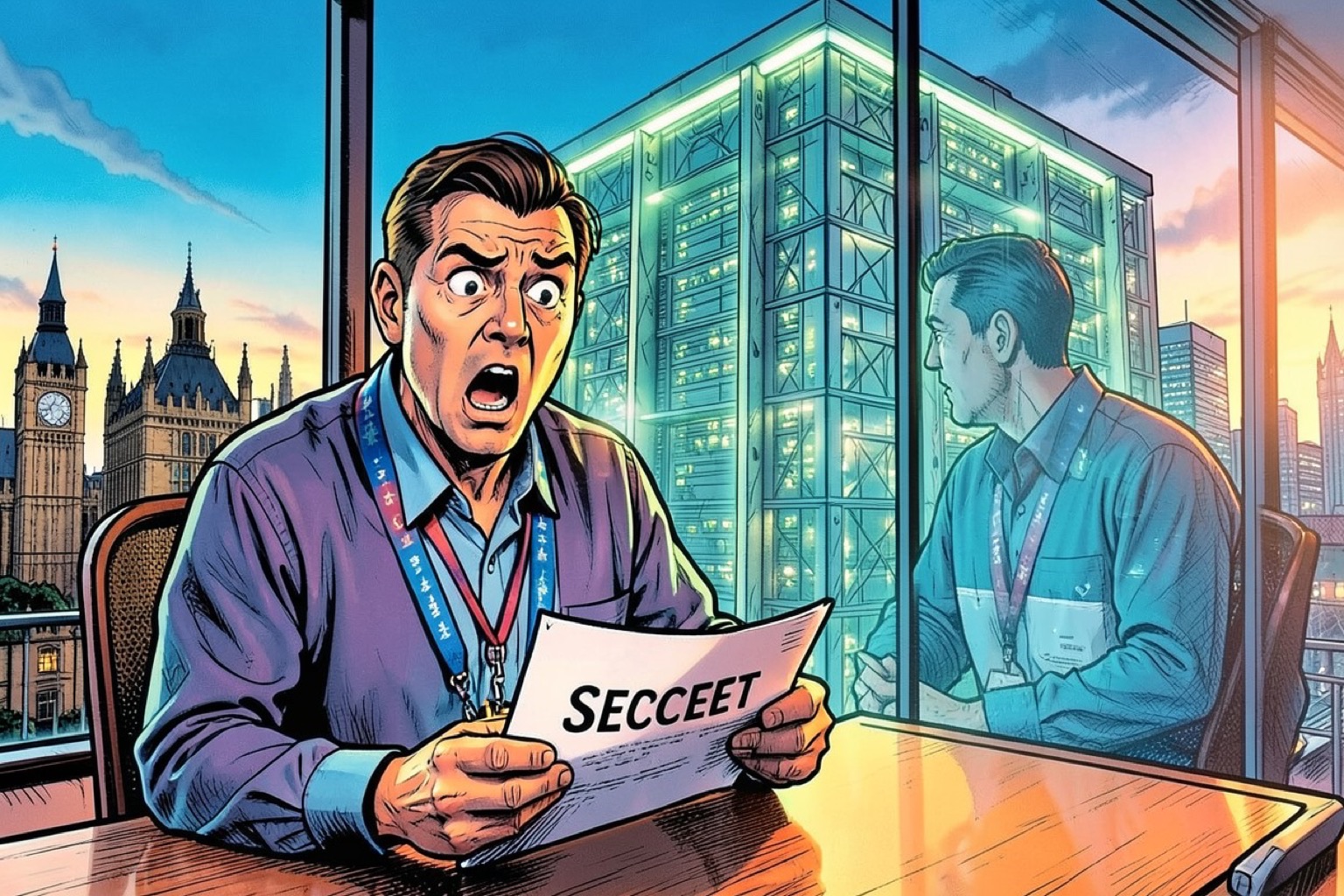
Current and former Google researchers tell The Washington Post that internal review processes for research papers have become increasingly restrictive, with studies examining AI risks or limitations facing particular scrutiny [1]. Some papers have been delayed for months or blocked entirely [2]. Researchers argue they are not seeking to leak trade secrets but want to publish findings on AI behavior, potential biases, and societal impacts that do not reveal proprietary training methods [2]. Employment contracts deter staff from warning the public about AI risks, according to workers who spoke on condition of anonymity [1].
The Pentagon deal that broke trust
In April 2026, Google signed a classified agreement with the Pentagon allowing “any lawful governmental purpose” for its AI models on air-gapped networks [3]. The announcement blindsided employees. Senior management had repeatedly insisted Google would not cave to Pentagon demands, and over 100 DeepMind researchers had urged chief scientist Jeff Dean to refuse any military deal crossing red lines around domestic mass surveillance and autonomous weapons [3]. More than 600 employees signed a letter to CEO Sundar Pichai protesting the negotiations [3].
The contract includes advisory language discouraging mass surveillance and autonomous weapons without human oversight, but explicitly states it “does not confer any right to control or veto lawful Government operational decision-making” [3]. On classified networks, Google cannot monitor what queries are run, what outputs are generated, or what decisions follow [5]. DeepMind research scientist Alex Turner described the agreement as relying on “aspirational language with no legal restrictions” [8].
Union demands go beyond typical workplace issues
The union vote was not primarily about pay or working conditions. The demands are governance demands: an end to military AI use by the US and Israeli militaries, restoration of Google’s scrapped commitment not to build AI weapons or surveillance tools, creation of an independent ethics oversight body, and the individual right for researchers to refuse projects on moral grounds [8]. These demands exist because the governance structures supposed to exist from above — AI principles, ethics board, internal review — were dismantled or overridden when they conflicted with revenue [8].
Google removed its explicit pledge against weapons development from its published principles in February 2025 [8]. The firing of Ethical AI team co-leads Timnit Gebru and Margaret Mitchell in 2020 and 2021 signaled internal dissent would not be tolerated [8]. The 2024 firing of 28 employees protesting Project Nimbus, a $1.2 billion contract with the Israeli government, reinforced the pattern [8].
Industry-wide tension over independent evaluation
The conflict extends beyond Google. Anthropic and OpenAI have sought significant control over what outside evaluators can publish, concerned findings could reveal trade secrets . Measures under discussion include having lab employees observe embedded evaluation teams and preventing evaluators from working at multiple labs simultaneously . But what labs consider crucial intellectual property can overlap with information relevant to judging a model’s risk, leading to arguments and redactions . Without agreed standards, companies building the most powerful models could dictate how their systems are examined .
Cross-company solidarity signals a shift
In March 2026, more than 30 employees from Google DeepMind and OpenAI, including Google chief scientist Jeff Dean, filed an amicus brief supporting Anthropic in its lawsuit challenging the Pentagon’s “supply-chain risk” designation [6]. The brief warned that punishing a leading US AI company threatens the entire industry’s competitiveness [6]. Nearly 900 employees at Google and OpenAI had previously signed an open letter urging their leadership to refuse government requests for domestic mass surveillance or autonomous lethal targeting [6]. OpenAI lost at least one staffer, Caitlin Kalinowski, over its Pentagon deal [6].
What this means for AI accountability
The structural conditions that made worker leverage possible in 2018 — when 4,000 employees killed Project Maven — no longer exist [8]. The classified AI market is worth tens of billions, the Pentagon has demonstrated it will retaliate against non-cooperative companies, and competitors have signed equivalent deals [8]. Individual protest now results in dismissal; collective action through unionization is the remaining path.
For the public, the stakes are direct. When researchers cannot publish safety findings, and when models operate on classified networks without independent oversight, the ability to assess risks in healthcare, education, employment, and public safety diminishes [2]. The outcome at Google will set precedents affecting research freedom across the entire AI industry [2].
Sources
- Google DeepMind workers vote to unionise after classified Pentagon AI …
- Google researchers are fighting the company to tell the world what they …
- Google Researchers Push for AI Transparency Against Company
- Google’s Pentagon deal blindsided its own AI researchers
- Google’s AI researchers told management to refuse classified … - TNW
- Exclusive-Behind AI industry’s call for independent reviews, a fight …
- Google and OpenAI employees back Anthropic in its legal fight … - Fortune
- Google’s AI is being manipulated. The search giant is quietly fighting back